
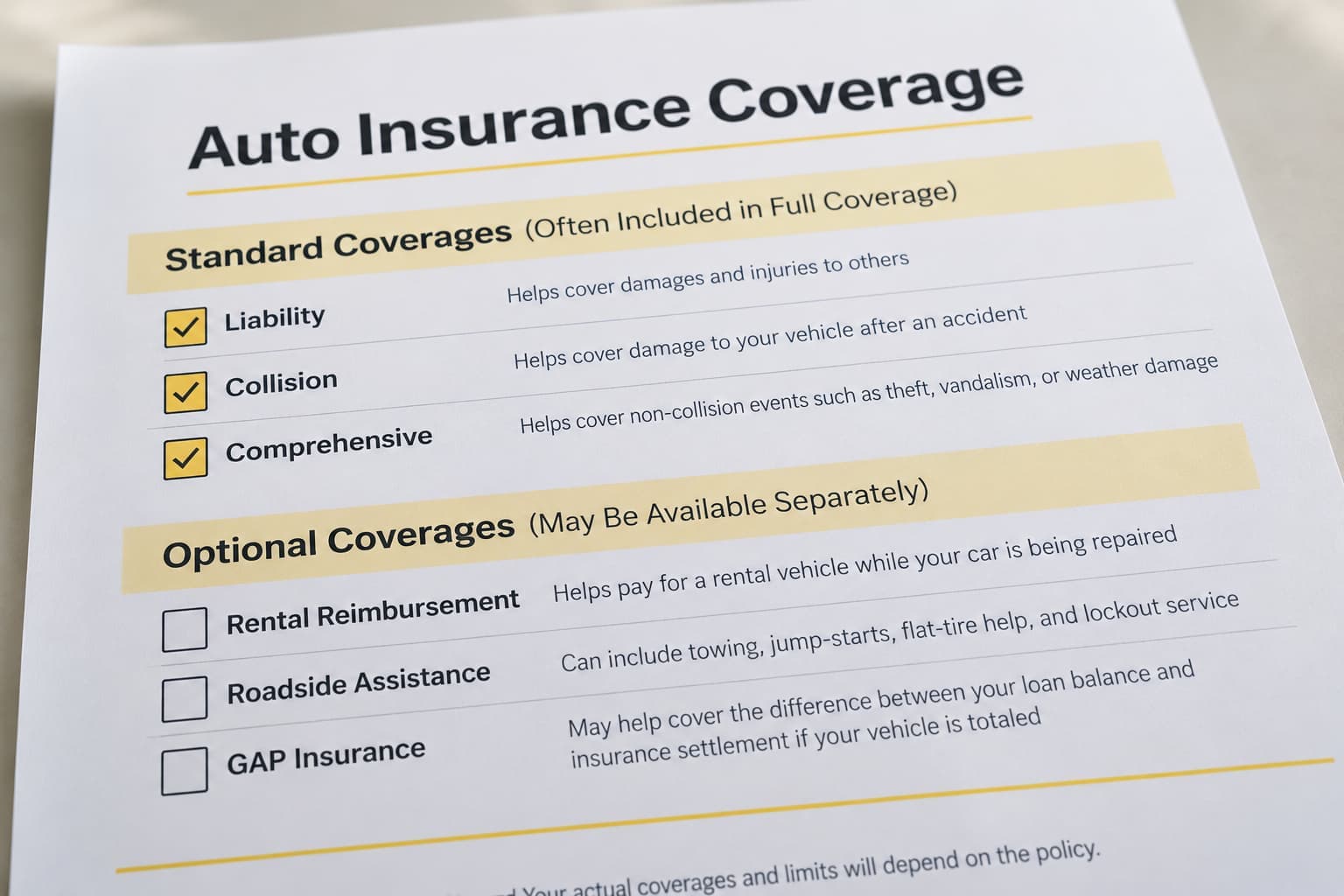
Full Coverage gives your vehicle broader protection than liability-only insurance, but some expenses and situations fall outside the standard combination of liability, collision, and comprehensive coverage.
Maintenance, mechanical problems, pre-existing damage, and personal belongings are common examples. Other protections, such as rental reimbursement, roadside assistance, and GAP, may be available separately.
One thing that matters is how the damage happened. Collision and comprehensive are designed around covered losses, while routine upkeep, wear, and mechanical problems are generally handled differently.
Does Full Coverage Cover Mechanical Problems?
Mechanical problems are usually handled outside standard auto insurance.
If an engine, transmission, alternator, or another part wears out or stops working because of an internal problem, the repair is generally considered a vehicle maintenance or mechanical expense.
Depending on the vehicle, protection for certain mechanical repairs may come from a manufacturer warranty, extended warranty, or service contract instead.
Does Full Coverage Cover Maintenance and Wear?
Regular maintenance remains part of owning and caring for your vehicle.
That includes things such as:
- Oil changes
- Brake replacement
- New tires
- Routine servicing
- Parts that wear out over time
Full Coverage is designed for covered losses rather than everyday upkeep.
Keeping up with maintenance can also help protect the value and condition of your vehicle before an insurance claim ever happens.
Does Full Coverage Cover Pre-Existing Damage?
Full Coverage applies to eligible losses that happen while the coverage is in effect.
Damage that was already present when coverage began, such as an existing dent, scratch, or older hail damage, would generally remain separate from a future claim.
This is one reason insurers may ask about the condition of a vehicle when coverage is added or changed.
Does Full Coverage Cover Things Stolen From Your Car?
Coverage for the vehicle and coverage for the belongings inside it are usually handled separately.
If someone breaks into your car, comprehensive coverage may help with eligible damage to the vehicle itself.
Items such as a laptop, phone, bag, or other personal belongings are generally considered personal property. Depending on your policy, homeowners or renters insurance may provide protection for those items instead.
So while Full Coverage can help protect the car, other insurance may be what protects what you keep inside it.
Is Rental Reimbursement Included With Full Coverage?
Rental reimbursement is typically an additional coverage rather than part of the standard Full Coverage combination.
It can help pay toward a rental vehicle while your insured car is being repaired after an eligible covered loss.
For drivers who depend on their car every day, rental reimbursement can be worth checking when comparing policies.
Look at the actual coverages listed on the policy to see whether it is included.
Does Full Coverage Include Towing or Roadside Assistance?
Roadside assistance may also be available separately.
Depending on the insurance company and policy, it can help with services such as:
- Towing
- Battery jump-starts
- Flat-tire assistance
- Lockout service
The services and limits vary between insurers.
If roadside help is something you want available, make sure it appears as part of your policy rather than assuming it comes with collision and comprehensive.
Is GAP Insurance Included With Full Coverage?
GAP insurance provides a different type of protection from Full Coverage.
If a financed vehicle is totaled, the insurance settlement and the remaining loan balance are not always the same.
For example, you might owe $18,000 on a vehicle that has a covered value of $15,000. GAP coverage may help with an eligible difference between what the insurance settlement pays and what is still owed on the loan.
GAP is often offered when you finance a vehicle through a dealership or lender, and the cost may be included in the loan. Some auto insurance companies also offer GAP coverage separately.
Because GAP is tied to the loan balance rather than the physical damage to the vehicle itself, it is separate from the liability, collision, and comprehensive coverage commonly referred to as Full Coverage.
What Should You Look for in a Full Coverage Policy?
The phrase “Full Coverage” is useful, but the details of the policy matter more than the label.
When comparing policies, look at:
- Liability limits
- Collision coverage
- Comprehensive coverage
- Collision and comprehensive deductibles
- Optional coverages
- Policy exclusions
Two policies can both be described as Full Coverage while being structured differently.
If you are comparing Full Coverage car insurance in Oklahoma City, looking at the individual coverages makes it easier to understand what you are actually getting.
Frequently Asked Questions
Does Full Coverage cover engine failure?
Mechanical failures caused by wear, age, or an internal problem are generally handled outside standard collision and comprehensive insurance.
Is rental reimbursement part of Full Coverage?
Rental reimbursement is commonly offered as an additional coverage. Check the individual policy to see whether it is included.
Are belongings inside my car covered by Full Coverage?
Auto insurance generally treats the vehicle and your personal belongings separately. Eligible personal property may instead be covered through renters or homeowners insurance.
Does Full Coverage include roadside assistance?
Roadside assistance may be available as an optional coverage and can include services such as towing, jump-starts, and flat-tire help.
Is GAP insurance part of Full Coverage?
GAP is generally separate. It is designed to address certain differences between a vehicle’s covered value and the remaining loan balance after an eligible total loss.
What happens to damage that was already on the car?
Pre-existing damage generally remains separate from new losses that happen after the coverage takes effect.
Build Coverage Around What Matters to You
Full Coverage provides a strong foundation by combining liability, collision, and comprehensive insurance to protect you and your vehicle in a range of situations.
You can then shape the policy around your needs. Options such as rental reimbursement, roadside assistance, and GAP may provide additional protection, while routine maintenance and mechanical repairs remain part of regular vehicle ownership.
Knowing what each coverage does makes it easier to choose a policy that fits your vehicle, budget, and priorities.