
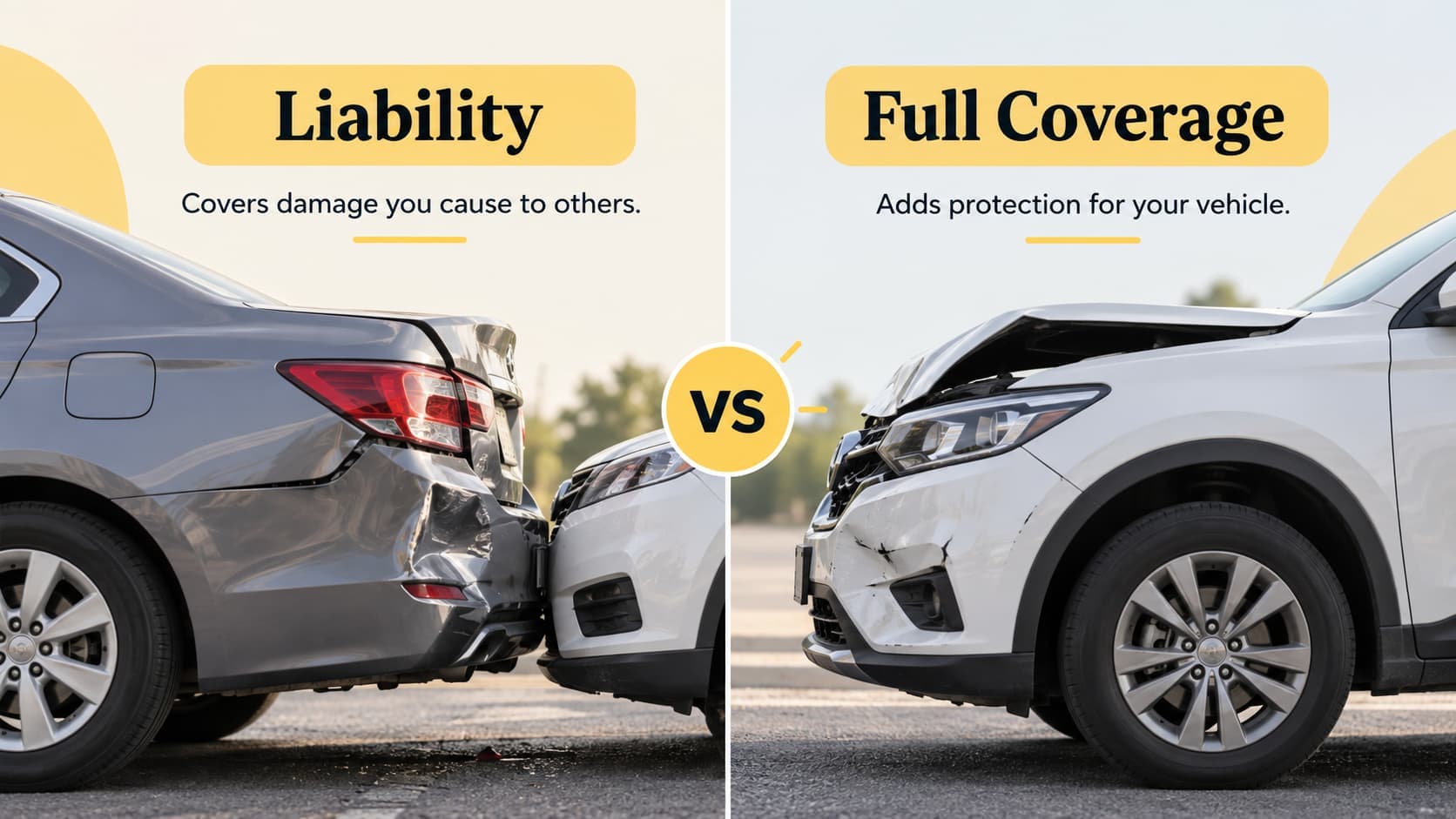
One accident can involve several parts of an auto insurance policy.
Imagine traffic slowing on I-44 in Oklahoma City and you rear-end the vehicle in front of you. The other car is damaged, the other driver is injured, and your own vehicle also needs repairs.
Each part of the loss falls under a different part of the policy.
Property damage liability covers damage to the other vehicle. Bodily injury liability covers the other driver’s injuries. Collision covers damage to your own car.
What Does Liability Cover in an Accident?
Liability coverage handles the damage or injuries you cause to someone else.
Liability car insurance has two main parts: bodily injury liability and property damage liability.
Damage to the Other Car
Property damage liability covers damage you cause to another person’s vehicle or property.
If you rear-end another vehicle on I-44, the damage to that vehicle falls under your property damage liability coverage.
Oklahoma requires at least $25,000 in property damage liability per accident.
Injury to the Other Driver
Bodily injury liability covers injury-related costs when you are responsible for hurting another person in an accident.
Oklahoma’s minimum bodily injury limits are:
- $25,000 per person
- $50,000 per accident
Together with the $25,000 property damage limit, Oklahoma’s minimum liability requirement is commonly written as 25/50/25.
Our breakdown of Oklahoma’s minimum liability insurance requirements explains how those three limits work.
What Does Full Coverage Add?
Full coverage keeps liability coverage and adds collision and comprehensive coverage.
That means liability still handles covered damage and injuries you cause to other people, while collision and comprehensive protect your own vehicle in different situations.
A full coverage car insurance policy commonly includes:
- Liability
- Collision
- Comprehensive
In the rear-end accident above, collision is the coverage that handles damage to your own car.
What Happens to Each Car After the Same Accident?
The difference is easiest to see side by side.
| What happened | Liability only | Full coverage |
| Other vehicle is damaged | Property damage liability applies | Property damage liability applies |
| Other driver is injured | Bodily injury liability applies | Bodily injury liability applies |
| Your vehicle is damaged | Liability does not cover it | Collision applies |
| Repairs to your vehicle involve a deductible | No collision coverage | Collision deductible applies |
With liability only, your policy covers the damage and injuries you caused to the other party, up to your policy limits.
With full coverage, that same liability protection stays in place while collision adds coverage for your own vehicle.
So in one accident:
Their vehicle → Property damage liability
Their injury → Bodily injury liability
Your vehicle → Collision
Does Liability Cover Your Own Car?
No. Liability coverage is designed for damage and injuries you cause to other people.
If you cause an accident and your own vehicle is damaged, liability does not pay to repair your car.
Collision coverage is what protects your vehicle after a covered crash.
That is one of the biggest differences between liability-only coverage and full coverage.
Where Does Comprehensive Fit?
Comprehensive handles damage that happens outside of a typical collision.
It covers certain losses such as:
- Hail
- Theft
- Vandalism
- Fire
- Flooding
- Falling objects
- Certain animal strikes
For example, if hail damages your parked car in Oklahoma City, comprehensive is the coverage that applies.
Collision and comprehensive coverage serve different purposes. Collision covers crash-related damage to your vehicle, while comprehensive covers many non-collision losses.
Even with both included, every policy still has its own limits, deductibles, exclusions, and covered losses. Understanding what full coverage does not include helps make those differences clearer.
Can Liability and Collision Apply to the Same Accident?
Yes.
They apply to different parts of the same accident.
If you cause a crash in Oklahoma City, property damage liability covers the vehicle you hit, while collision covers damage to your own car.
One part of the policy handles the other person’s loss. Another part handles your own vehicle.
That is why liability and collision can both be involved in the same accident.
Liability vs. Full Coverage in Oklahoma City
Liability and full coverage protect different parts of the same loss.
Liability covers covered injuries and property damage you cause to someone else.
Full coverage keeps that liability protection and adds collision and comprehensive coverage for your own vehicle.
Cheapest Auto Insurance can help compare liability and full coverage options in Oklahoma City and explain what each policy includes before coverage starts.
Start a quote to compare coverage options for your vehicle.
Frequently Asked Questions
Does full coverage include liability insurance?
Yes. Full coverage commonly includes liability along with collision and comprehensive coverage.
Does liability cover my own car after an accident?
No. Liability covers damage and injuries you cause to others. Collision covers damage to your own vehicle after a covered crash.
Can liability and collision apply to the same accident?
Yes. Liability covers damage you cause to the other vehicle, while collision covers damage to your own car.
Does comprehensive cover collision damage?
No. Comprehensive covers certain non-collision losses. Collision coverage handles damage to your vehicle from a covered crash.